Pakistan Demands UN Session Over Israeli Strikes in Doha; PM Visits Qatar
about 1 year ago

0
0
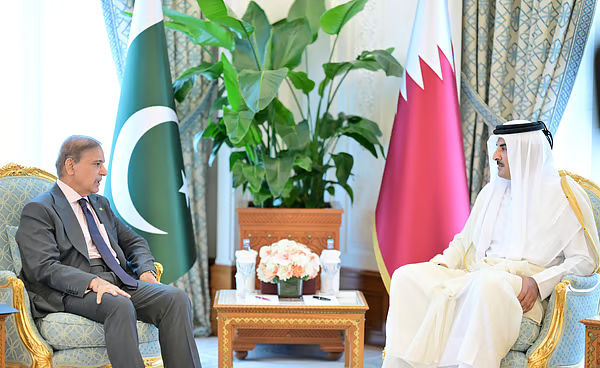
Pakistan has formally requested an emergency meeting of the UN Security Council following Israeli airstrikes in Doha on September 9, 2025. Prime Minister Shehbaz Sharif arrived in Qatar on September 11, 2025, to express solidarity, condemning the attacks as a violation of Qatar's sovereignty.
Pakistan Demands UN Session Over Israeli Strikes in Doha; PM Visits Qatar
The international community is closely monitoring the escalating tensions in the Middle East following Israeli airstrikes targeting Hamas leaders in Doha, Qatar, on September 9, 2025. In response to the incident, Pakistan has formally requested an emergency session of the United Nations Security Council to address the attacks. Prime Minister Shehbaz Sharif of Pakistan arrived in Qatar on September 11, 2025, to express solidarity with the nation and unequivocally condemn the strikes. He characterized the strikes as a “dangerous provocation” and a clear violation of Qatar's territorial integrity and international law.
The UN Security Council convened an emergency meeting on September 10 or 11, 2025, to discuss the situation. During the session, the council condemned the strikes on Doha. While some reports indicate the condemnation did not explicitly name Israel, the context of the attack, targeting Hamas officials present in Qatar, made the perpetrator clear. Qatar has also initiated legal steps in response to the Israeli attack, signaling its intent to pursue diplomatic and legal avenues to address the breach of its sovereignty.
The Israeli airstrikes reportedly targeted Hamas leaders, including negotiators involved in ongoing ceasefire talks. Qatar's Prime Minister, speaking at the emergency UN Security Council meeting, accused Israel of demonstrating a lack of concern for the hostages held in Gaza, suggesting that the targeting of Hamas officials in Doha undermined efforts to secure their release. This statement highlights the complex diplomatic landscape, where Qatar has historically played a crucial role as a mediator in the Israeli-Palestinian conflict.
This incident is situated within the broader context of the ongoing Israeli-Palestinian conflict, where Hamas remains a significant actor. The Israeli government, under Prime Minister Netanyahu, had previously issued warnings to Qatar, suggesting that the country would face consequences if it did not expel Hamas officials. This indicates a strategic shift by Israel to target Hamas leadership even in locations outside of traditional conflict zones, a move that has drawn international scrutiny.
Reports indicate that at least six individuals were killed in the Israeli attack on Hamas leadership in Qatar, though broader casualty figures related to the ongoing conflict in Gaza are not directly linked to this specific strike. The international response underscores the delicate balance of power and diplomacy in the region. Pakistan, a nation that has consistently supported the Palestinian cause and condemned Israeli actions, has taken a firm stance by demanding international accountability. The situation continues to evolve, with implications for regional stability and ongoing peace efforts.
More like this
Tags
#Pakistan#Israel#Hamas#Qatar#Doha#Airstrikes